An EIDL loan default happens when you miss payments or breach the loan agreement. What it costs you personally depends on what you signed: a personal guarantee can make you liable even if the business closes, and collateral can let the SBA pursue business assets. The loan documents, not the entity type alone, decide your exposure.
What Happens When an EIDL Loan Goes Into Default
An EIDL (Economic Injury Disaster Loan) is made directly by the U.S. Small Business Administration, not by a bank. That matters in default, because the SBA is the creditor you are dealing with, and its servicing and collection rules differ from those of a commercial lender.
Default does not mean one late payment. It means you have fallen far enough behind, or breached the loan agreement, that the SBA treats the loan as unlikely to be repaid on its original terms. From there the SBA can move the account into collections, and several law-firm and government-oversight sources describe an escalating process rather than a single event.
The point most borrowers miss is that default itself is not what determines your personal exposure. Two things in your paperwork do: whether you signed a personal guarantee, and whether the SBA holds a lien on business assets. The next two sections take those in turn. We have no way to see your documents, so treat everything here as general education and check your own loan authorization and agreement.
Do You Owe an EIDL Loan Personally? How the Personal Guarantee Works
A personal guarantee is a promise that you, as an individual, will repay the business's debt if the business does not. It is a separate obligation from the loan itself, which is why it can survive after the company stops operating.
The $200,000 line is the one to know for COVID-era EIDLs. The SBA's own COVID EIDL page says a personal guarantee is required for loans above $200,000, and a Congressional Research Service report lists waiving the guarantee rules for loans of $200,000 or less as one of the COVID-era relief measures. In practice, that means many borrowers at or below that figure were not asked to guarantee, while larger loans generally carried one.
Do not assume, though. Some borrowers have reported confusion over whether they signed a guarantee, and published legal analysis has discussed cases where a required guarantee appears to be missing. The only reliable answer is in the signed documents. Look for guarantee language in the loan authorization and agreement and in any closing paperwork you received.
If you did guarantee the loan, the SBA can look to you personally for the balance. Legal commentary notes this can include situations where the company itself files for Chapter 7 bankruptcy: the business's filing does not by itself release the person who guaranteed the debt. Whether bankruptcy of any kind makes sense for you is a question for a licensed attorney, not a blog post.
What Collateral Secures an EIDL Loan (and What a UCC Lien on Business Assets Means)
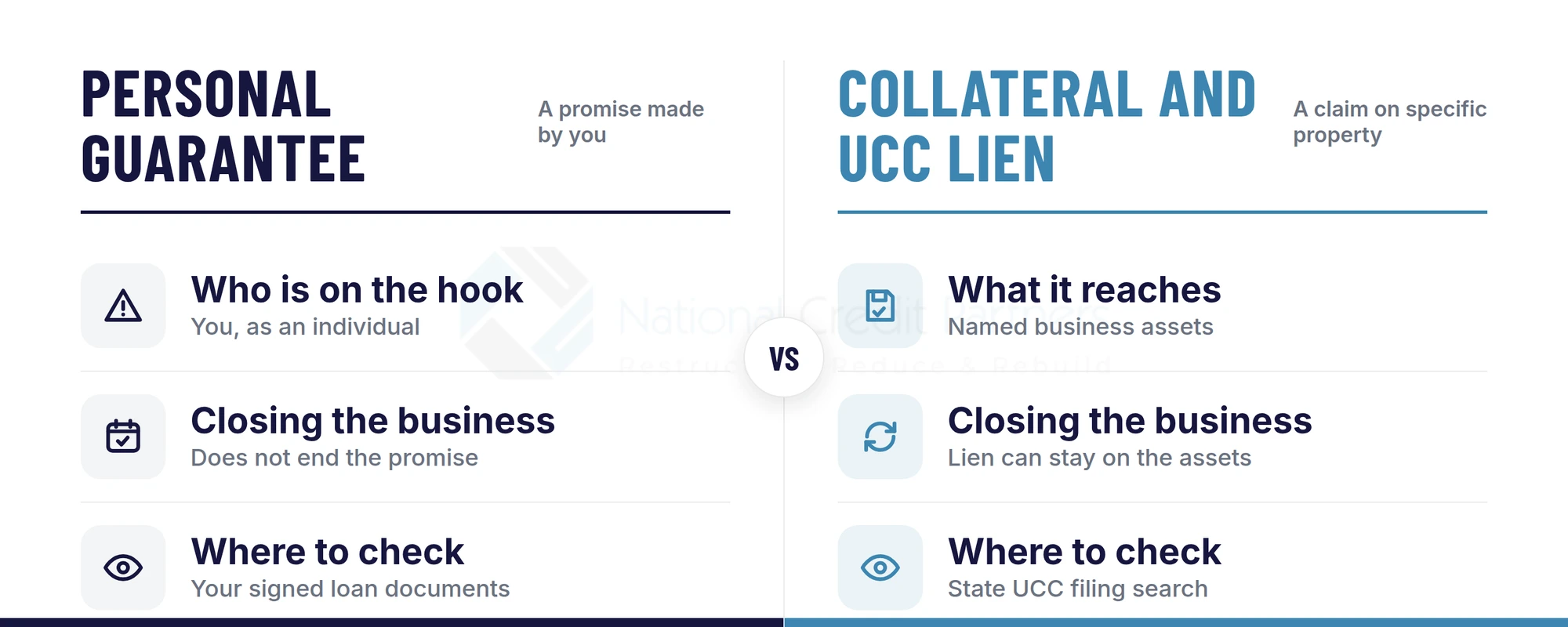
Collateral is a different question from the guarantee. A guarantee puts your personal assets in play; collateral gives the SBA a claim on specific property.
For COVID-era EIDLs, the SBA's own COVID EIDL page says collateral is required for loans above $25,000 and describes a lien filed on the borrower's business assets (the threshold for newer disaster loans is higher, so check your approval date). Commentary on smaller loans says no collateral was pledged for balances under that figure, which is why a delinquent small EIDL is often described as a lower-stakes problem. Treat these thresholds as a guide and confirm them against your own agreement.
A UCC-1 financing statement is the public filing that records a lender's claim. With a blanket lien, that claim can reach equipment, inventory, receivables and other business property, and it makes the SBA a secured creditor if the business is liquidated or enters bankruptcy. A secured creditor is generally paid from the pledged assets ahead of unsecured creditors, which affects what is left for everyone else.
If the business also has other obligations, such as merchant cash advances that file their own UCC liens, the order of those filings can matter. See our explanation of guarantee exposure on defaulted business debt for how guarantees work in that separate context. An EIDL and an MCA are different products with different terms, so do not read one agreement into the other.
Can the SBA Take Your House?
Not automatically. Default alone does not give the SBA your home; reaching it generally takes a personal guarantee or a recorded lien, followed by collection steps and often a judgment. Our guide to SBA loan default and the Offer in Compromise walks through the personal guarantee and lien question in full, so we will not repeat it here.
Closing or Dissolving the Business With an EIDL Loan Outstanding
Closing the business does not cancel the loan. An EIDL-focused attorney site puts it plainly: the debt is meant to be repaid even if the business no longer exists, and the SBA will still want the money back. What changes is how the SBA pursues it.
If the business is closing, tell the SBA before you file dissolution paperwork. The SBA's COVID-era programs page says that for an anticipated closure or liquidation, you should send a message through the SBA Loan Portal or contact the COVID EIDL Servicing Center. Ask for any arrangement to be confirmed in writing, and keep copies of everything you send and receive.
If you guaranteed the loan, closure shifts attention to you personally. If the SBA holds a lien, it shifts attention to whatever business assets remain. Selling or moving encumbered assets without understanding the lien can create new problems, so talk to an attorney before any sale.
Some law firms report that the SBA generally considers an Offer in Compromise only after a business has permanently closed and its assets have been liquidated. That is the SBA's program, not ours. NCP does not negotiate Offers in Compromise with the SBA; we cover how the process works as education in our Offer in Compromise guide.
Sole Proprietor, LLC or Corporation: What Changes About Your Exposure
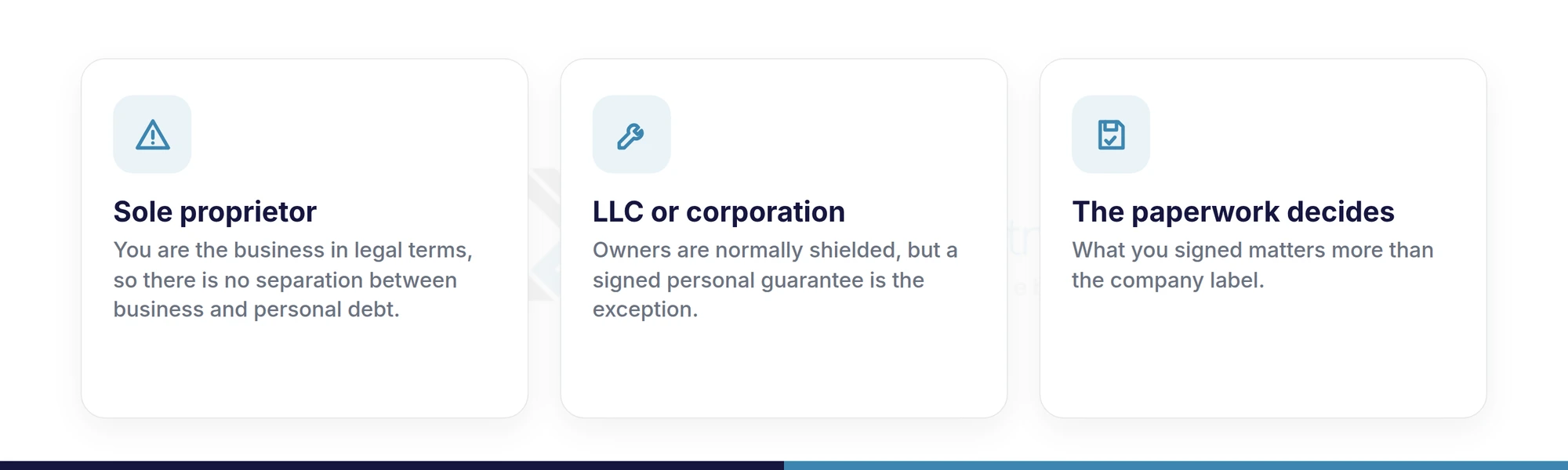
Your entity type sets the starting point, but the paperwork sets the outcome.
A sole proprietor generally is the business in legal terms, so there is no separation between business debt and personal debt to begin with. A guarantee adds little because the borrower is already you.
An LLC or corporation normally shields owners from the entity's debts. A personal guarantee is the exception: by signing it, you agreed to stand behind this specific debt, and the entity's shield does not cover that promise. The same shield also does not protect against a lien the entity itself granted over its own assets.
So an LLC owner with no guarantee and no meaningful assets sits in a very different position from an LLC owner who guaranteed a six-figure loan. The label on the company matters far less than what you signed. We make the same point about other business debt in our look at SBA loans versus bank loans, where guarantees from the owners are a standard feature.
What to Do Before You Miss Another Payment

Acting before the account worsens gives you more options than acting after it does.
1. Pull your documents. Find the loan authorization and agreement, any guarantee, and any security agreement. Check the loan amount against the $200,000 and $25,000 thresholds above. 2. Check public records. A UCC search through your state's filing office shows whether a lien was recorded against the business. 3. Contact the SBA through its official channels. Use the Loan Portal or the COVID EIDL Servicing Center listed on the SBA's COVID-era programs page, and keep a written record of every exchange. 4. List everything else you owe. An EIDL rarely sits alone. Daily-debit advances, equipment loans and vendor balances all compete for the same cash, and the order in which you address them can matter. 5. Speak to a licensed attorney. NCP is not a law firm and does not give legal advice. A lawyer can read your actual documents, tell you what your guarantee covers, and advise on closure, liquidation or bankruptcy.
NCP works with owners who are carrying several obligations at once and need them looked at together. If an EIDL balance is one of them, contact us to talk through your situation. We provide business debt restructuring through structured reconciliation, not legal advice, and we do not handle SBA Offers in Compromise.
Frequently Asked Questions
Do I have to personally repay an EIDL loan if my business closes?
It depends on the loan documents. Many EIDL borrowers signed a personal guarantee, and larger loans can also carry collateral. If you guaranteed the loan, closing the business does not erase your personal exposure. Read your loan authorization and agreement, and speak with a licensed attorney about your situation before you stop paying.
Can the SBA take my house over an EIDL loan?
Only through a specific chain of events. A default alone does not hand the SBA your home. It typically requires a personal guarantee or a lien on real estate, followed by collection steps and, in many cases, a court judgment. Whether your home is exposed depends on what you signed and what was recorded.
What happens to an EIDL loan when a business dissolves?
Dissolving the entity does not automatically cancel what it owes. Creditors can still pursue the balance against remaining business assets and, where a personal guarantee exists, against the guarantor. Contact the SBA servicing office and get any arrangement confirmed in writing before you file dissolution paperwork.
Is an EIDL loan treated like an SBA 7(a) loan in default?
No. EIDL loans are made directly by the SBA, while 7(a) loans are made by participating lenders with an SBA guarantee, so servicing and collection paths differ. Our guide to SBA loan default covers the SBA side and what each route means for you.
Final Thoughts
An EIDL default is rarely as simple as the loan is the business's problem or the loan follows you home. The answer sits in two documents: whether you guaranteed it, and whether the SBA recorded a lien. Find those before you decide anything about closing, selling assets or stopping payments, and have an attorney read them with you.
We are proud to be an A+ BBB Rated Company
An A+ rating represents BBB's high degree of confidence that the business is operating in a trustworthy manner and will make a good faith effort to resolve any customer concerns filed with the BBB.