

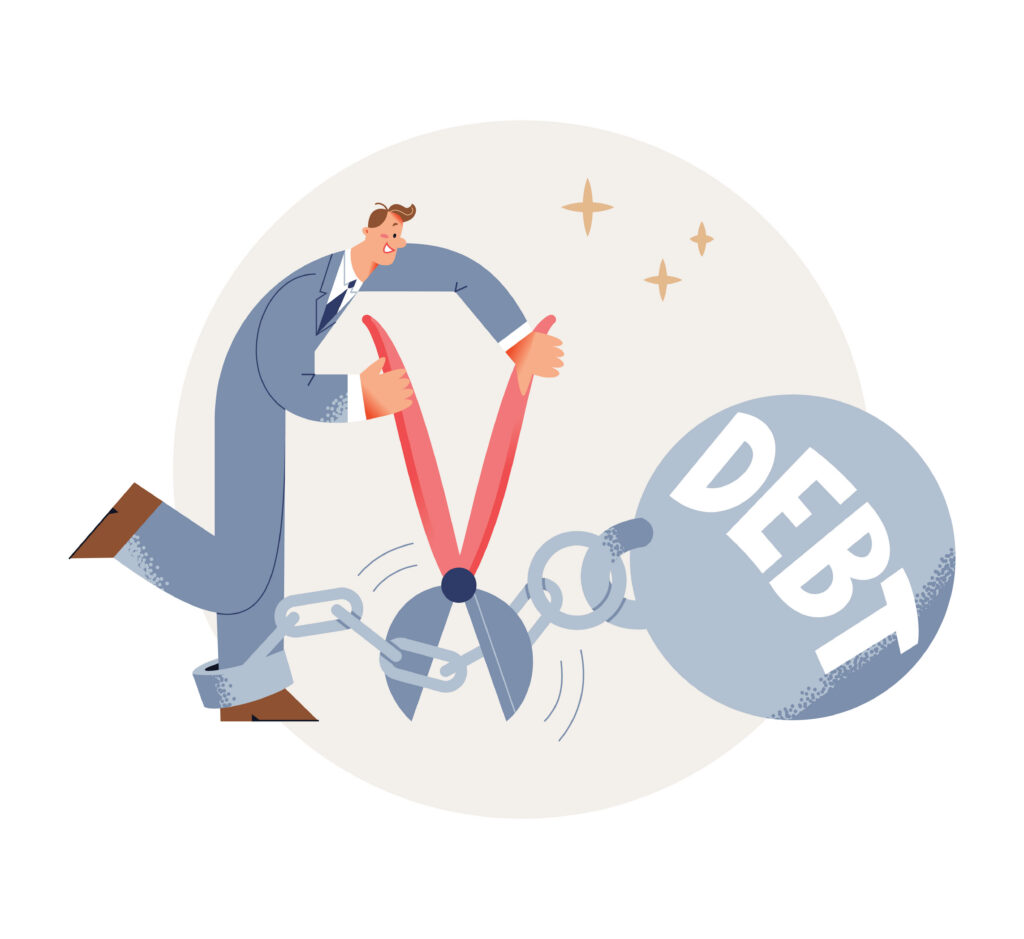
Small business debt help at National Credit Partners means structured reconciliation — direct negotiation with your creditors to replace unaffordable business debt with modified terms marked paid in full. It is built for US business owners carrying $50,000 or more in business debt, not consumer debt settlement or credit counseling.
When a business is buried under debt it can no longer service, "help" means very different things depending on who you call. The results you find are crowded with federal relief programs, nonprofit credit-counseling agencies, and consumer debt-settlement companies — most of them designed for personal or consumer debt, not the obligations a business actually carries. National Credit Partners works on a narrower problem: the structured reconciliation of business debt for owners who owe $50,000 or more.
Structured reconciliation is a restructuring and mediation process. We negotiate directly with your creditors, on your business's behalf, to replace terms you can no longer meet with modified terms your cash flow can support — and to have those obligations marked paid in full rather than left as a lasting mark against the business. It is not credit counseling, which builds a household budget and a debt-management plan around consumer accounts. It is not debt settlement, where an account is deliberately left unpaid so it can later be settled for less, with the credit damage that comes with it.
That distinction matters, and on a financial decision this size it is worth being clear about. A settlement approach treats non-payment as leverage. Structured reconciliation treats your creditor as a party with a real interest in being repaid — because a lender who marks a balance paid in full recovers more than one who forces a default or pushes the business into bankruptcy. Our role is to make that mutually workable outcome the path of least resistance for both sides.
Structured reconciliation is built for the kinds of debt that put an otherwise healthy business under real pressure — the obligations that keep an owner up at night rather than the routine ones.
The process is deliberate, and it starts with understanding the full picture before anyone contacts a creditor.
For the business owner, the aim is straightforward: an affordable payment, relief from the debits that were starving cash flow, and a route that avoids the default or legal action a stalled account can trigger. We are not asking your creditors to write the debt off — we are giving them a realistic way to be repaid, which is why the approach works.
Structured reconciliation is for US businesses carrying $50,000 or more in business debt. The threshold reflects the nature of the work: direct, negotiated restructuring is suited to meaningful business obligations rather than small consumer balances.
It applies to business debt specifically — merchant cash advances, business loans, and lines of credit taken in the business's name. Many of the owners we work with are already behind, already facing aggressive debits, or already staring at a possible default, and none of that disqualifies you. If your debt is still serviceable and your goal is to modify the terms of what you owe more broadly, our business loan modification hub is the better starting point.
And if the business is fundamentally sound and what you actually need is new financing rather than relief from existing debt, that is a different fork entirely — our SBA and bank loan options are built for financeable businesses looking to fund growth or replace high-cost debt with a lower-cost facility.
Debt help is not one thing, and part of getting it right is knowing where structured reconciliation sits among the alternatives — and when another route makes more sense.
For many owners carrying significant merchant cash advance or business-loan debt, restructuring reaches an affordable outcome without the credit consequences of a settlement or the finality of bankruptcy. The right answer depends on your numbers, which is exactly what the initial consultation is for.
No. Debt settlement typically relies on leaving an account unpaid so it can later be settled for less than the balance, which damages the business's credit. Structured reconciliation negotiates modified terms directly with your creditors and aims to have obligations marked paid in full. National Credit Partners is not a debt-settlement company.
Structured reconciliation is designed for US businesses carrying $50,000 or more in business debt. Below that threshold, other routes are usually a better fit, and we will tell you so.
No. That is a settlement tactic, and it is not ours. Our aim is a workable arrangement that gets your creditors repaid on modified terms. A default serves no one — most creditors recover more from a restructured, paid-in-full outcome than from a forced default or a bankruptcy.
Yes. Stacked advances — several MCAs debiting one account at once — are one of the most common situations we handle. Our merchant cash advance restructuring page explains how that specific problem is addressed.
These are common in business lending and do not take restructuring off the table. We map any UCC-1 filings and Confession of Judgment exposure as part of the creditor-position analysis, because knowing a creditor's legal position is central to negotiating realistically.
The initial Business Debt Consultation is free. It is a review of your debt and your options, not a commitment, and there is no charge to have the conversation.
National Credit Partners is a US-based firm and an A+ BBB-accredited business. Structured reconciliation is carried out through direct negotiation with your creditors, on your business's behalf.
If your business is sound and you are seeking new capital rather than relief from existing debt, that is a different path. Our SBA and bank loans page covers financing options for businesses that qualify.
Debt help only works when it fits the debt you actually have. For a business owner carrying real business obligations — merchant cash advances, stacked advances, business loans pulling more than the company can spare — the goal is not a quick settlement that leaves a mark, but a restructured arrangement the business can live with and creditors will accept. That is the whole point of structured reconciliation: a resolution that keeps the business running and gets the obligation marked paid in full. If that describes where you are, the next step is simple — get your free Business Debt Consultation and see what your options actually are.
Carrying $50,000+ in business debt? See what structured reconciliation could do for you.
Get Your Free Business Debt ConsultationFill the form to request a free Business Debt Consultation Now!
By clicking “Continue” above, I understand and agree to the following terms and conditions:
An A+ rating represents BBB's high degree of confidence that the business is operating in a trustworthy manner and will make a good faith effort to resolve any customer concerns filed with the BBB.